
I Know
Overview
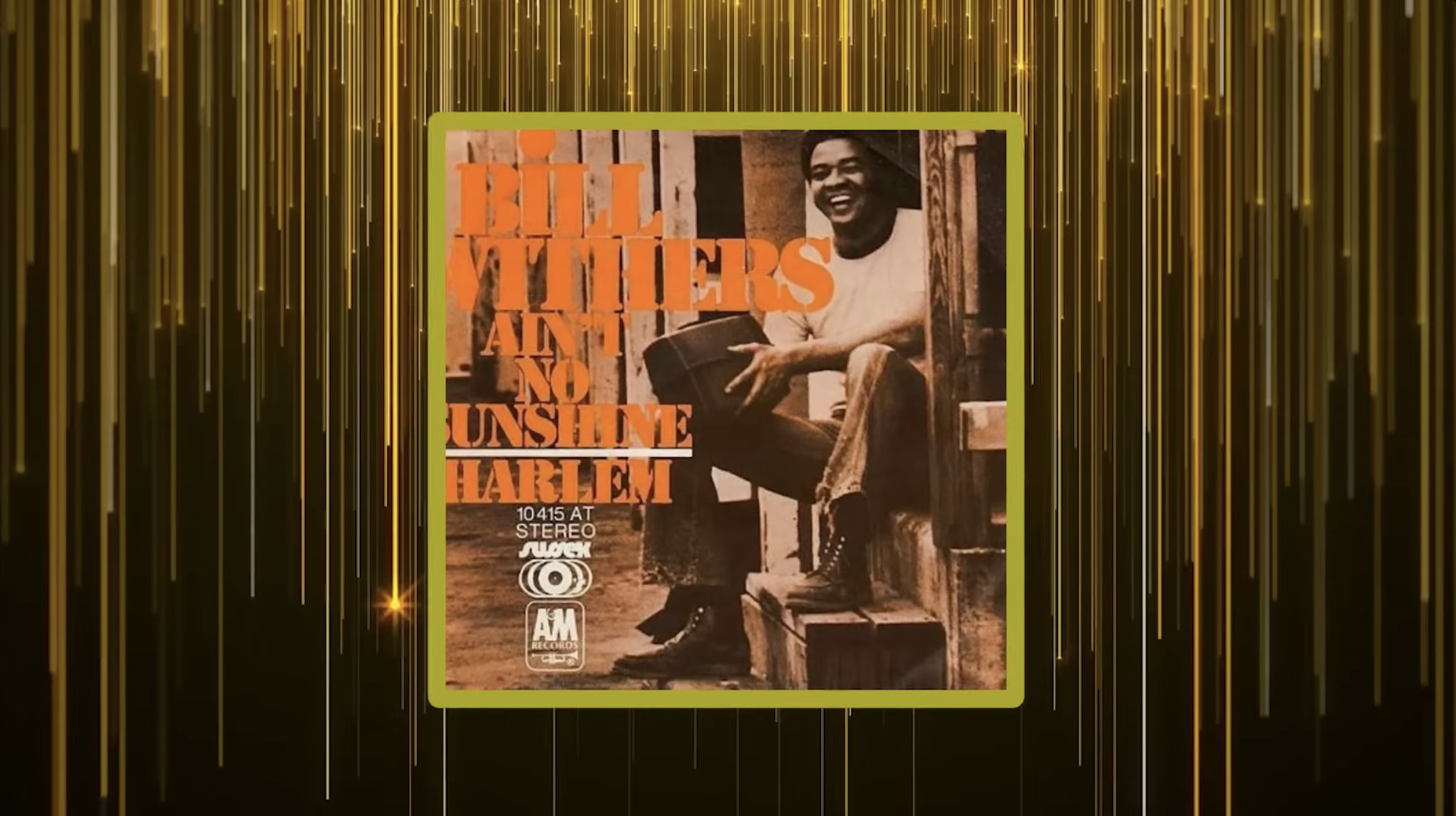
Bill Withers’ 1971 classic “Ain’t No Sunshine” offers a powerful case study in how an apparent songwriting “mistake” can become the emotional centerpiece of a song. At the heart of this track is the now‑famous section where Withers repeats the phrase “I know” 26 times in a row—a passage that began as nothing more than a placeholder while he searched for a “real” lyric. For modern writers using structured critique tools, that kind of repetition would often score poorly on originality and word economy, yet in this song it is the moment listeners remember most.
Brief Backstory of the Song
“Ain’t No Sunshine” appeared on Bill Withers’ debut album Just As I Am, produced by Booker T. Jones and released in 1971. The song became Withers’ breakthrough hit, reaching number six on the U.S. R&B chart and number three on the Billboard Hot 100. Withers was inspired to write it after watching the 1962 film Days of Wine and Roses, describing the characters’ destructive relationship as “like going back for seconds on rat poison”—missing something that was never good for you in the first place.
This emotional tension—missing what harms you—runs through the lyric and culminates in the obsessive "I know" section, which captures the way the mind spirals when someone you depend on is gone.
The 26 "I Know"s: A Scratch Line That Stayed
During the bridge, Withers sings “I know” 26 times in succession before landing on the line, “Hey, I oughta leave the young thing alone, but ain’t no sunshine when she’s gone.” Songwriting analysis sources describe this as a classic “scratch lyric”—a temporary line used to keep the session moving while the writer plans to replace it later with a fully crafted verse.
Withers himself explained that he originally intended to write additional lyrics there but was persuaded by the musicians in the studio to leave the repetition as it was. Surrounded by established players like Booker T. Jones, members of Booker T. & the M.G.’s, and guest musicians, Withers saw himself as “this factory worker puttering around” and deferred to their instincts when they told him, in essence, “Do not fix this.”
What began as a placeholder became the emotional vortex of the song: a chant that feels like fixation, denial, and self‑talk all at once.
Why It Works Musically and Emotionally
On paper, repeating the same two words 26 times violates several modern critique norms: limited vocabulary, high redundancy, and a lack of fresh imagery in that section. Yet “Ain’t No Sunshine” proves that raw performance and musical variation can turn minimal text into maximum impact.
Several elements make the repetition work:
-
Melodic variation: Withers does not sing all 26 “I know”s on a single repeated pitch; instead, he subtly shifts the melody, phrasing, and contour, creating a sense of movement and escalation across the phrase.
-
Rhythmic feel: The groove underneath stays steady while his timing and emphasis bend against it, giving the section a hypnotic, almost improvisational character.
-
Vocal dynamics and tone: He changes intensity, attack, and intonation as he moves through the repetitions, so it feels less like copying and more like a rising internal argument with himself.
-
Narrative function: The long stretch of “I know” builds tension that finally resolves on the line “Hey, I oughta leave the young thing alone,” revealing what he actually knows but cannot bring himself to do.
Taken together, these choices transform a bare two‑word fragment into an emotional monologue. The listener does not miss more words because the performance communicates obsession and conflict beyond what additional lyrics might have said.
How a Modern Refinery Might Score the Section
A contemporary song‑review platform that uses objective criteria—such as lyric density, originality, vocabulary diversity, and avoidance of excessive repetition—would likely flag the “I know” passage as a weakness at first glance.
Typical critique outcomes for a section like this might include:
-
Lyric originality: Lower score, because the same phrase is repeated with no new imagery or development.
-
Word economy: Mixed score; the section uses very few unique words, which can be seen as either efficient or underwritten depending on context.
-
Section development: Potentially low, since the bridge or middle section is often expected to provide a new angle, twist, or lyrical lift, and here it offers no new text information.
-
Listener engagement (on paper): Risk of monotony if the reviewer looks only at the lyric sheet and not at the audio performance.
From a purely textual perspective, many modern evaluators would recommend cutting the number of repetitions, varying the language, or writing a more developed third verse.
Would It Pass Today?
If “Ain’t No Sunshine” were submitted as an unknown writer’s demo today, the 26 identical “I know”s would almost certainly lower some objective lyric scores. Algorithms or rubric‑based systems that analyze only the text—without hearing Bill Withers’ delivery—would see heavy repetition and minimal lexical variety, and might flag it as a structural or lyrical weakness.
However, commercial viability and emotional impact are not decided by the lyric sheet alone. In real‑world listening, the song’s success demonstrates that:
-
An unconventional choice can become the hook.
-
Emotional authenticity can outweigh formal rule‑keeping.
-
Performance, melody, and phrasing can elevate extremely simple text.
So while the bridge might “fail” certain technical tests on paper, the record itself clearly passes the only test that ultimately matters: enduring listener connection over decades.
Lessons for Modern Songwriters Using Structured Critique
“Ain’t No Sunshine” does not invalidate structured critique; instead, it shows how to use that kind of feedback wisely.
-
Let the tool highlight risks, not issue verdicts. A low score on repetition does not mean the choice is wrong; it means the choice is risky and needs to be justified by the melody, performance, and overall concept.
-
Distinguish page problems from performance solutions. On the page, 26 “I know”s look weak; in performance, Withers solves the problem through melodic and vocal variation.
-
Ask whether repetition is purposeful. In this case, the repeated phrase mirrors the mental loop of someone who “knows” the truth but cannot act on it, aligning perfectly with the song’s theme of unhealthy attachment.
-
Use critique to refine, not to sterilize. If a unique, emotionally truthful move gets flagged, the question is not “Is this allowed?” but “Can I make this work even better without losing its soul?”
Applying the Case Study
For writers submitting songs to a refinement or scoring system, “Ain’t No Sunshine” offers a practical grid:
-
If heavy repetition appears in a draft, first check the basics: Is the section melodically engaging? Does the vocal delivery change enough to avoid monotony? Does the repetition serve a clear emotional or narrative purpose?
-
Use critique feedback on repetition as a conversation starter: Why this phrase? Why this many times? Would fewer repetitions strengthen or weaken the impact?
-
Remember that not every song can—or should—rely on a performance as singular as Bill Withers’. For most writers, some level of textual development in a bridge or middle section will be necessary to keep listeners engaged.
“Ain’t No Sunshine” succeeds not because repetition is automatically powerful, but because a master performer used repetition in a uniquely expressive way. Structured critique would rightfully flag the risk, yet the final artistic judgment rests with the writer and the listener.
If you have never listened to this song, go here to listen to Bill delivering his 2:06 second masterpiece.
Keith Mohr
Related posts

Rich and Famous
Most songwriters want to be rich and famous, but the fastest way to kill that dream is to keep writing songs that aren’t rich enough to make anyone care. Find out what it takes to be rich and famous.

Are You Ready to Refine?
Every songwriter has songs that could be better. So why don't we fix them? Pride, laziness, bitterness, they all whisper the same lie: "It's fine the way it is." Here's why that mindset is costing you.

Gatekeeper
Songwriters love to talk about “gatekeepers.” But who are the gatekeepers? What is keeping you from seeing true success? Learn from someone who realized who it was.

What Song Refiners Actually Does Under the Hood
We've built a specialized AI review system with nearly 6,000 lines of custom code and over 100 backend functions. Here's what actually runs when you hit Submit.

Echo Chamber
Some songwriters push back the moment refinement is mentioned. Every now and then, someone will say, “My songs are perfect just the way they are—so why would I ever send one to Song Refiners just to have you tell me what to fix?

Rock and Roll Hoochie Koo
SongRefiners creator, Keith Mohr shares an interesting story about how he found himself in his recording studio with a true legend, discussing a song that most everyone has heard.