
The First 15 Seconds: Why Publishers and Music Supervisors Skip Your Song
I want to describe something honestly, because most songwriters have never watched it happen.
A music supervisor has a brief to fill and a deadline. Two hundred submissions are sitting in a folder. She opens the first one, listens for a few seconds, and moves to the next. Not because she is cruel or lazy, but because she has three hours and two hundred songs and the math does not allow anything else.
Most of those songs get somewhere between eight and fifteen seconds. That is the whole audition.
What they are actually listening for
They are not grading your craft in that window. They are answering three fast questions.
Does this sound like it belongs? Within a couple of seconds, a trained ear places a record next to the things it competes with. A muddy low end, a thin vocal, or an arrangement that sounds like a demo says "not yet" before a single word lands.
Is something happening? Not loud. Happening. Movement, intention, a sound that suggests somebody made a choice. Songs that idle get skipped.
Do I want to hear this voice? This one is brutal and almost entirely unconscious. Tone, commitment, believability. A technically accurate vocal that sounds like nobody in particular loses to a flawed vocal that sounds like somebody.
The intro problem
The most common reason a good song never gets heard is that the good part arrives too late.
Twenty-five seconds of atmospheric guitar feels like patience and craft to the writer. To somebody with two hundred files in a folder, it is twenty-five seconds of nothing. They are gone before your first line.
The current expectation is short. Often five to ten seconds before the vocal, sometimes zero, with the hook or a signature sound appearing early. If your intro is longer than that, it needs to be doing real work, establishing a sound nobody else has. "It builds nicely" is not work.
Other things that end the listen early
- A vocal buried in the mix. If they have to lean in, they will not lean in.
- A first line with no information. Opening on a general statement of feeling wastes the only seconds you are guaranteed.
- Loudness instead of dynamics. A track squashed flat has nowhere left to go, and the ear tires within a few bars.
- A false start. Count-ins, long fades, room noise, a breath before anything begins. Trim it.
- Missing or sloppy information attached to the file. A supervisor who likes the song and cannot instantly tell who wrote it, who controls it, and whether it is cleared will often just move on rather than chase it.
The uncomfortable part
None of this is about fairness. There are beautiful songs that never survive fifteen seconds, and there are ordinary songs that do because they open well.
But that is also the good news, because openings are fixable. You do not have to write a different song. You have to make sure the song you already wrote gets far enough to be heard.
Four things to do this week
- Time your intro with a stopwatch. Write the number down and defend it or cut it.
- Play only the first fifteen seconds for someone and ask what they think the song is.
- Move your strongest image or sound as early as you can survive putting it.
- Make sure the vocal sits clearly on top from the very first phrase.
Why this matters more than it used to
The volume of music being released every day has never been higher. Gatekeepers are not becoming more patient in response to that. They are becoming faster.
Which means the bar is not "is this good." The bar is "is this so clearly good that fifteen seconds is enough to prove it." Songs that clear that bar are the ones that get pitched, placed, and played.
If you want to know how your song reads in that window before you send it to somebody who only gives you one, put it through a review here. The first one is free, and it is a lot less painful than silence.
Related posts
How to Fix Generic AI Lyrics: Turning a Suno Draft Into Real Craft
AI-generated lyrics fail in predictable ways: borrowed images, symmetrical filler, and no stakes. Here is exactly what to cut and what to replace it with.

Is It Real, Or Is It...
Are major artists already using AI, MIDI-controlled pitch correction, backing tracks, and vocal processing to preserve the voices fans expect to hear? This article explores how AI may change live performance for legacy acts like Journey, Bon Jovi, and more.
What A Song Critique Costs
Real prices for professional song critiques in 2026, from NSAI and The Song Foundry to AI tools. What you get at each price, and what you actually need.
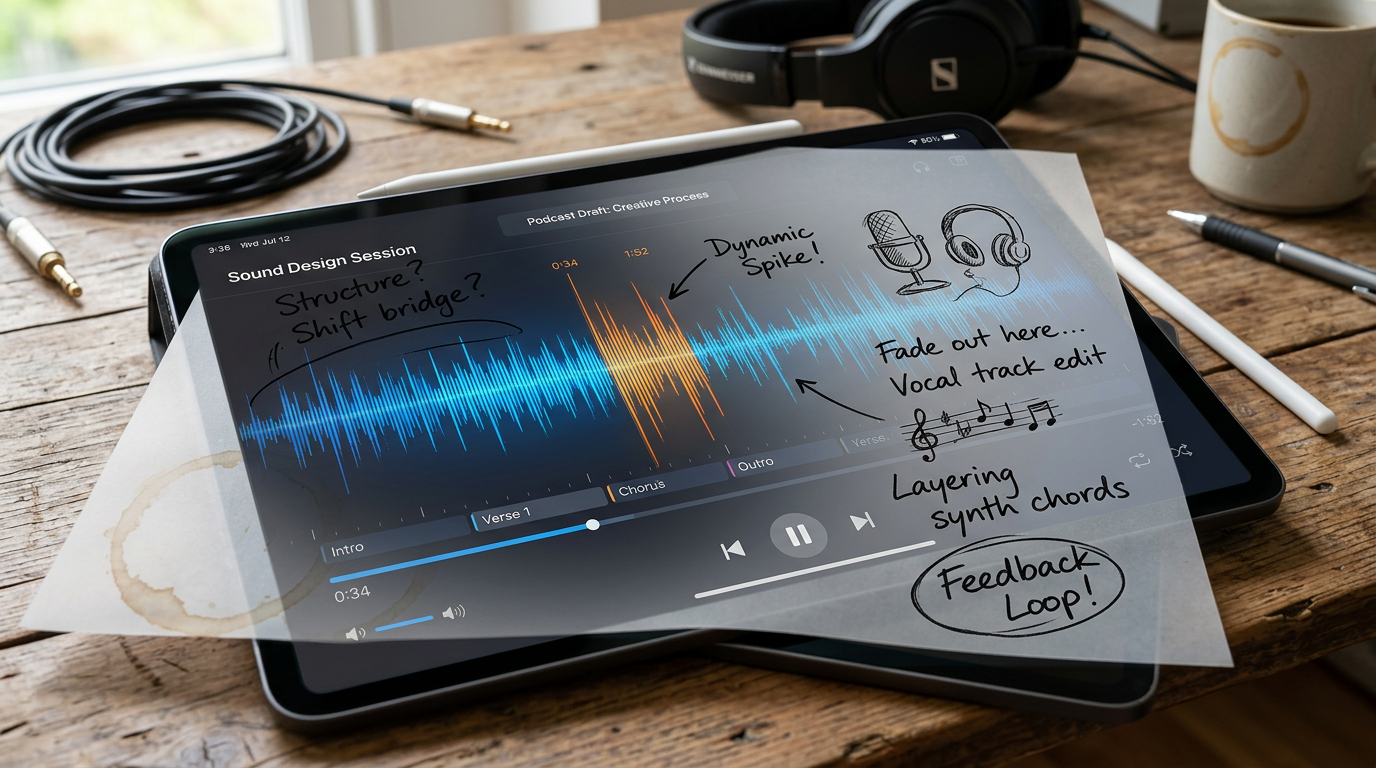
Rate My Suno Song: How to Get Real Feedback That Helps
Scoring tools tell you a Suno song is a 62. They cannot tell you why. Here is how to get feedback on AI-assisted music that actually improves the next one.
Why Your Songwriter Growth Stops The Minute You Think You Have Arrived
There is a moment every songwriter faces when progress quietly stops. It is not failure. It is the belief that you have arrived. That mindset kills growth faster than anything else.
Assisted Ideation
AI isn’t replacing songwriters—it’s amplifying them. I don’t use it as a shortcut or a black box; I use it like a creative co-writer and a high-end studio in my laptop, helping me move faster, go deeper, and get closer to the songs I was trying to write all along.